Leadership & Performance · Featured
Managing stakeholders wisely
Decoding political skill in organisational life
Stakeholder management is often framed as a rational endeavour: identify interests, map influence, build support. But seasoned leaders know it’s rarely that tidy. Navigating stakeholders requires emotional intelligence, ethical clarity, and political dexterity. That’s where the Baddeley and James political skills model comes in.
Beyond influence mapping: understanding political styles
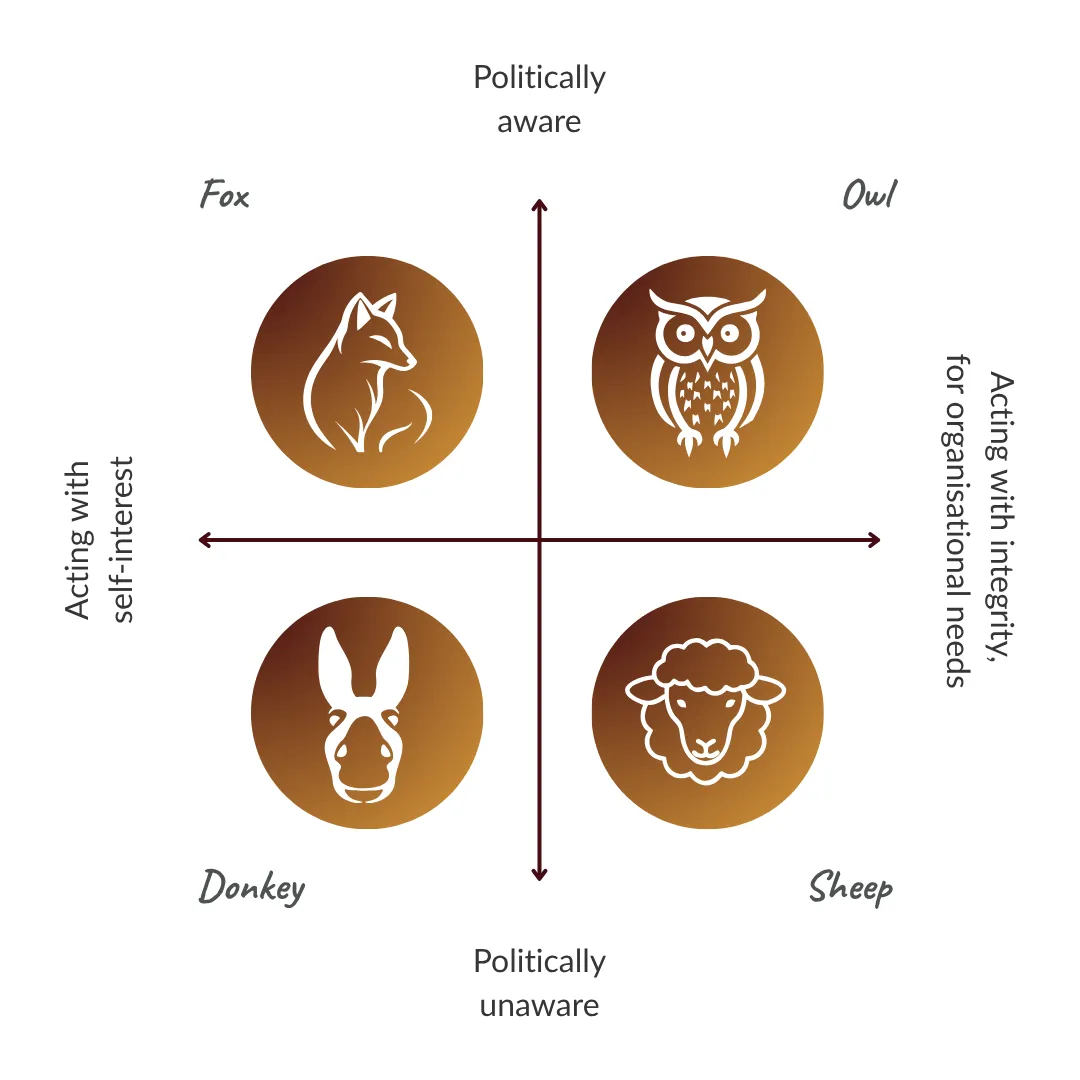
Rather than reducing individuals to boxes of ‘high interest, high influence,’ Baddeley and James offer a more human (and frankly, more useful) lens. Their model considers not only how politically aware a stakeholder is, but also what drives their behaviour: personal interest or organisational good.
This framework gives rise to four archetypes and broadly asserts that most people can be categorised as aligning with one of these:
Behavioural Summary
Owl
Astute, values-driven leaders who use power wisely and build lasting coalitions. Owls understand the politics of the organisation and their ethics mean they are inclined to use this for the benefit of the organisation.
Fox
Shrewd, opportunistic players- skilful but potentially destabilising if not aligned. Foxes are politically astute, but they typically use this for their own interests. They are good at forming coalitions and rallying people behind their cause.
Sheep
Loyal and well-intentioned but politically naïve, often underutilised or overlooked. The sheep archetype is built on a foundation of implied innocence. They want everything to work out for the good of the organisation, but they are oblivious to office politics and the personalities which shape organisational outcomes.
Donkey
Resistant, disinterested, or self-serving, Donkeys can quietly obstruct or derail progress. Donkeys are politically inept but lack the integrity of the sheep which makes them determined to get what they want and will ignore the established political power bases when trying to achieve something.
Why it matters in stakeholder engagement
When leading transformation or navigating change, recognising these styles helps clarify where to focus your energy:
- Nurture the Owls: These are your strategic allies- engage them early, involve them meaningfully, and leverage their credibility.
- Contain the Foxes: Their influence can’t be ignored, but alignment may require negotiation, boundary setting, or visible consequences.
- Support the Sheep: Often overlooked, these individuals can become powerful advocates with the right political mentorship and clarity of purpose.
- Manage the Donkeys: Resistance may stem from fear, cynicism, or disengagement. Address root causes where possible but accept that not every detractor becomes an ally.
Turning insight into action
Great stakeholder management isn’t about labelling people, it’s about understanding behaviour and responding strategically.
When leaders apply this model with curiosity and compassion, they can shift from reactive politics to intentional influence. The real power lies in helping others evolve their own political awareness- cultivating more Owls across the system and fostering an organisational culture where integrity and insight go hand in hand.
Discover the political communication series

Political Communication
Dancing with Foxes
How to hold influence without losing yourself
Read More
Political Communication
From Sheep to Owl
Developing political acumen with integrity
Read More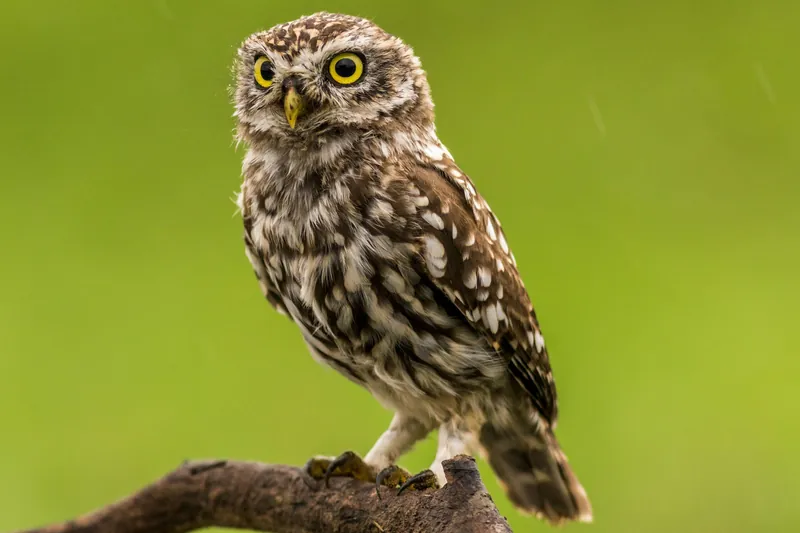
Political Communication
Owls in the wild
Lessons from the wisest leaders
Read More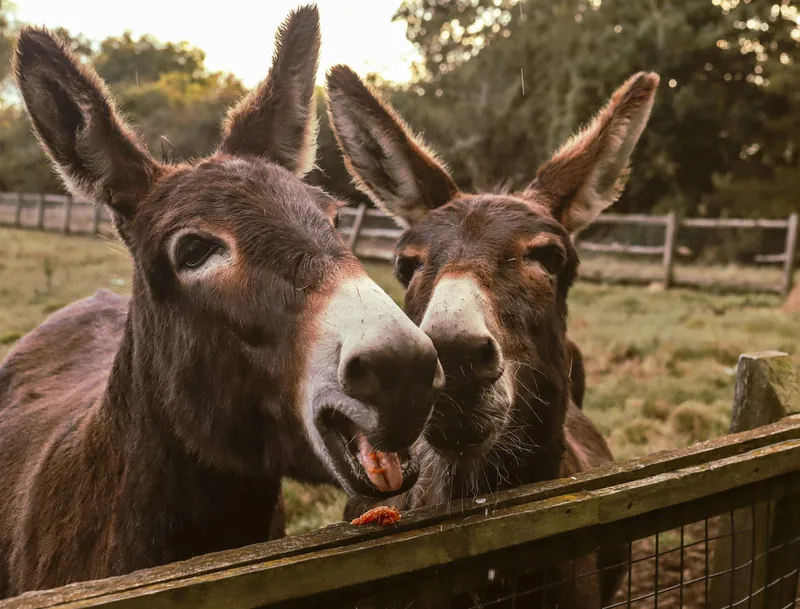
Political Communication
When the Ass is in charge
Managing upward to a 'donkey' with wisdom (and sanity)
Read More